


Service
Service and advice, from material selection to ...
Material selection
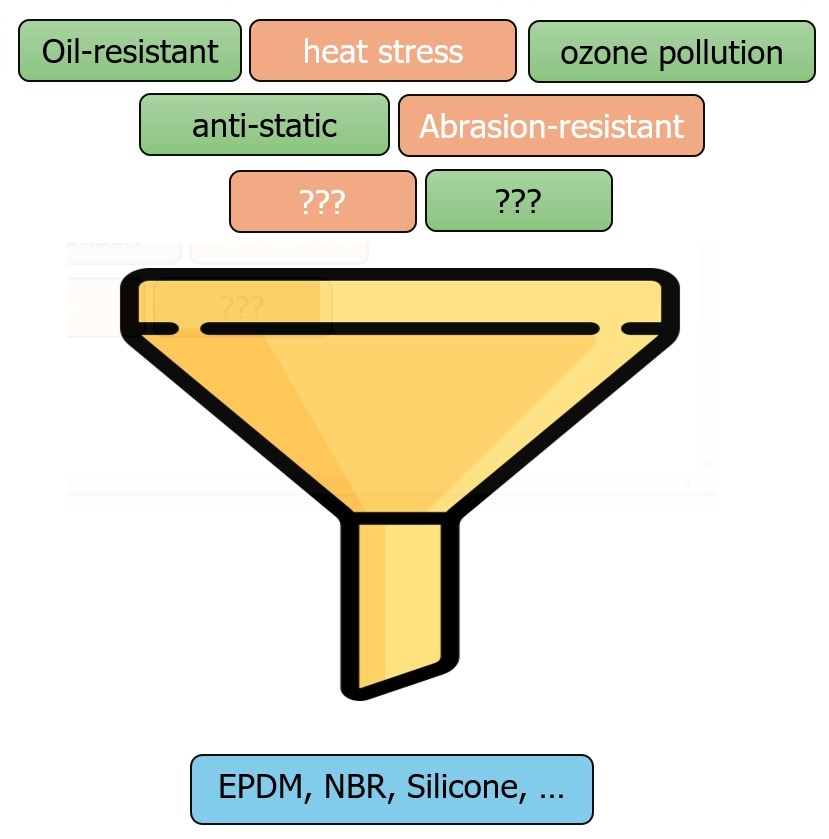
Choosing the right rubber material depends on many different parameters: operating temperature, weather and ozone, contact media, dynamic load,
The required function of the rubber roller and the prevailing conditions of use are the most important criteria for choosing the right rubber quality. Even the development of a new rubber compound can be necessary to obtain all the desired properties. Here we differentiate between the following properties (excerpt):
- MECHANICAL: hardness (Shore A, IRHD), tear resistance and elongation at break, tear-growth resistance, abrasion, elasticity, compression set
- THERMAL: thermal conductivity, thermal expansion
- ELECTRICAL: volume resistance (insulating, antistatic, conductive)
- CHEMICAL: oil, fue, solvents, water, acids, alkalis
rubber properties
mechanical
- hardness (Shore A, IRHD)
- tensile strangth
- elongation at break
- rebound resilience
- compression set
- abrasion
thermal
- thermal conductivity
- thermal expansion
- temperature resistance
electrical
- electrical resistance (insulating, antistatic, conductive)
chemical resistence against....
- oil
- fuel
- solvents
- water
- acids
- akalis
others
- Contact with food?
... material tests
Material and durability test
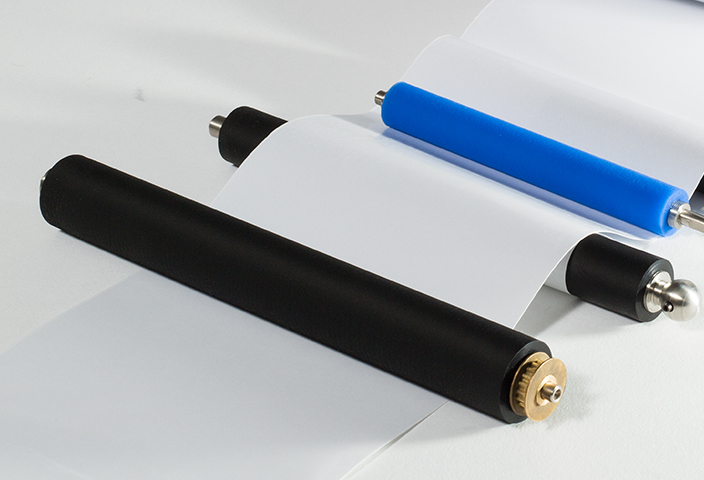
In collaboration with an external laboratory, we are able to assess the behaviour of a rubber compound in response to environmental influences or various contact media using a range of tests. These include, for example, the standard swelling test.
However, as laboratory conditions never prevail in practice – with many other influencing factors coming into play – we also have the option of using our roller test rig to test rubber rollers in liquid contact media under realistic, dynamic conditions. In this process, a pair of rollers is tested whilst rotating continuously within the contact medium.
The real-world conditions, for example of a CtP processor, can thus be accurately simulated.
Our products
Rubber rollers / foam rollers
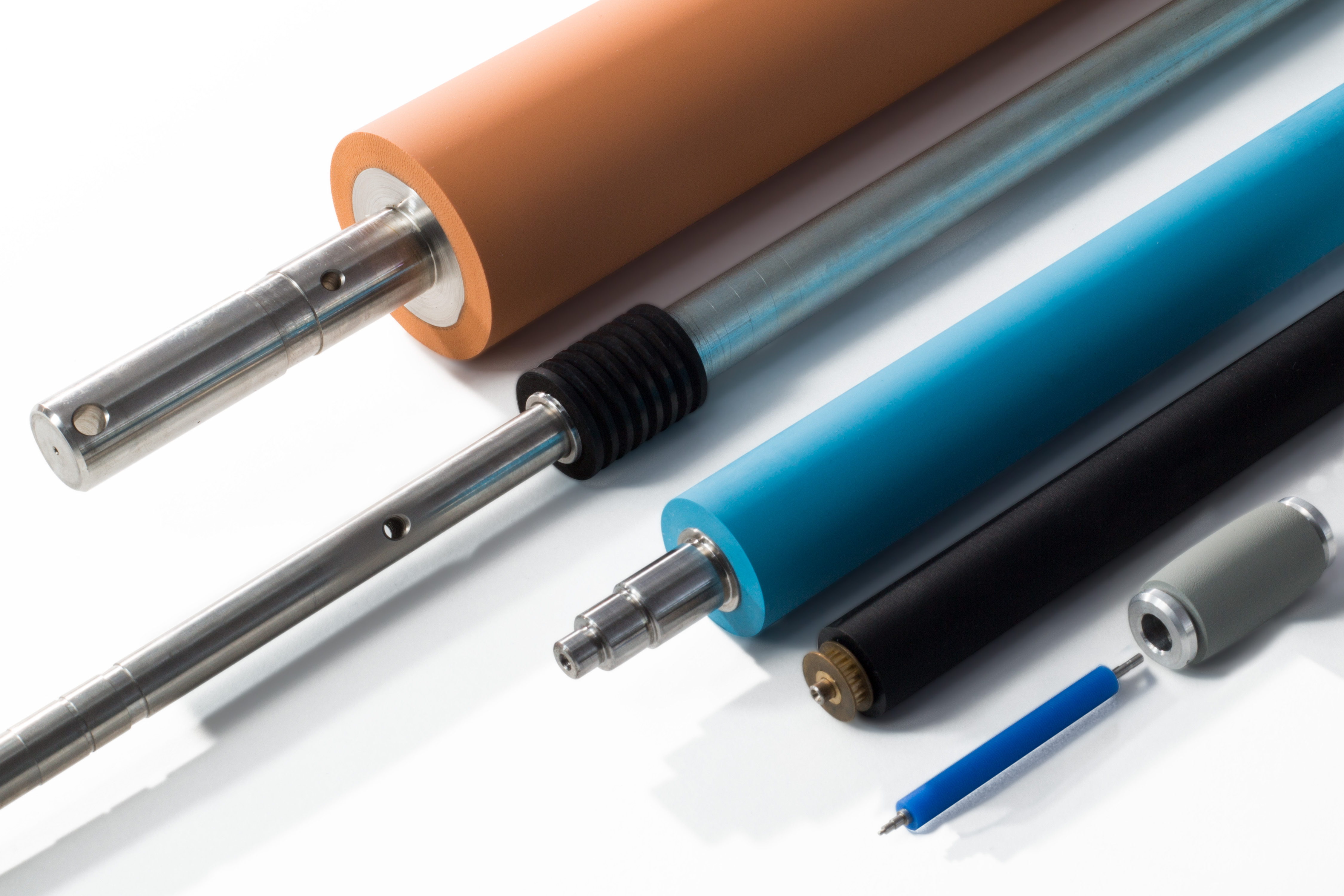
Rubber rollers or foam rollers – custom‑made from silicone, EPDM, NBR, and other materials.
Assembly groups
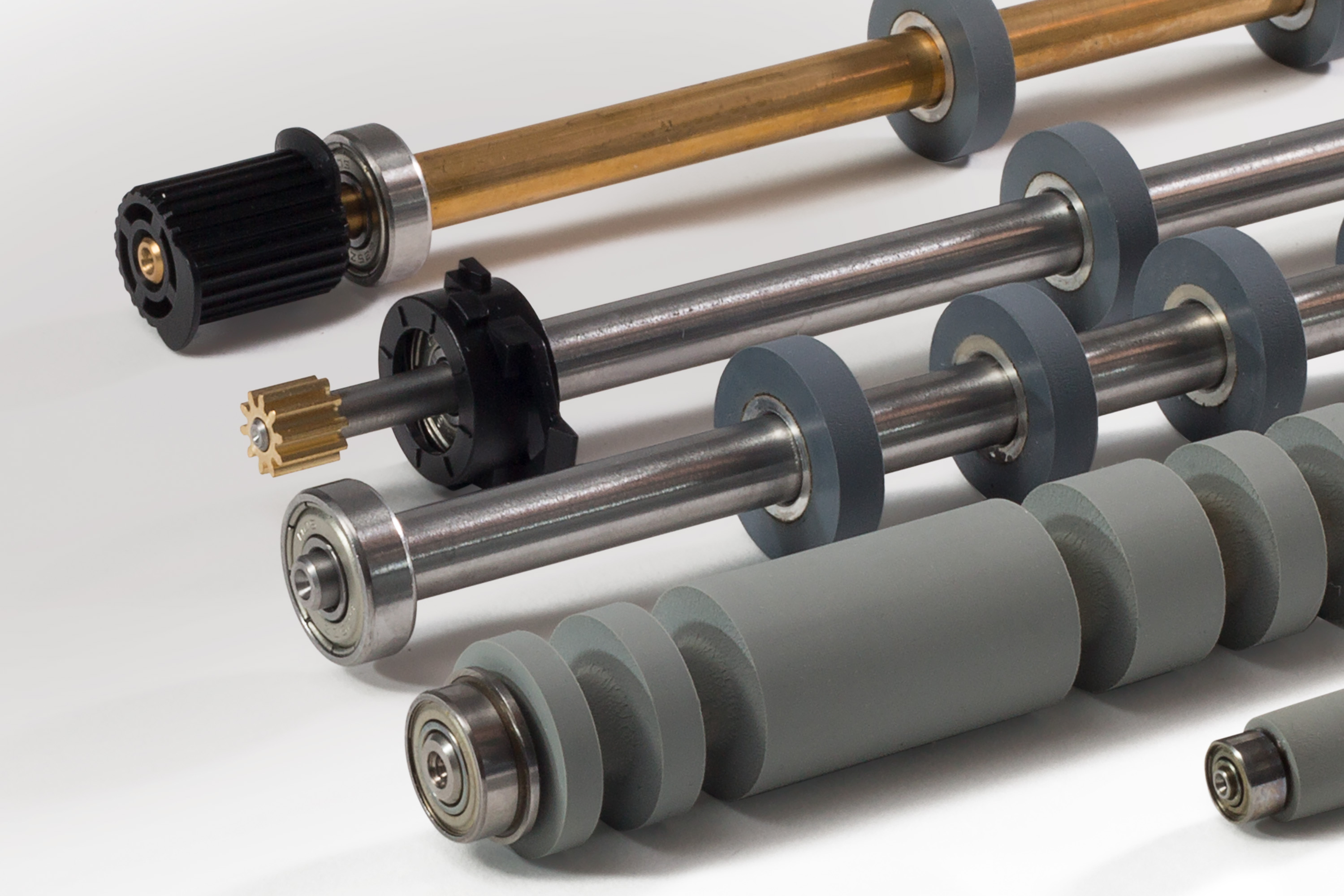
Assembly of additional components, spare parts kits & small subassemblies.
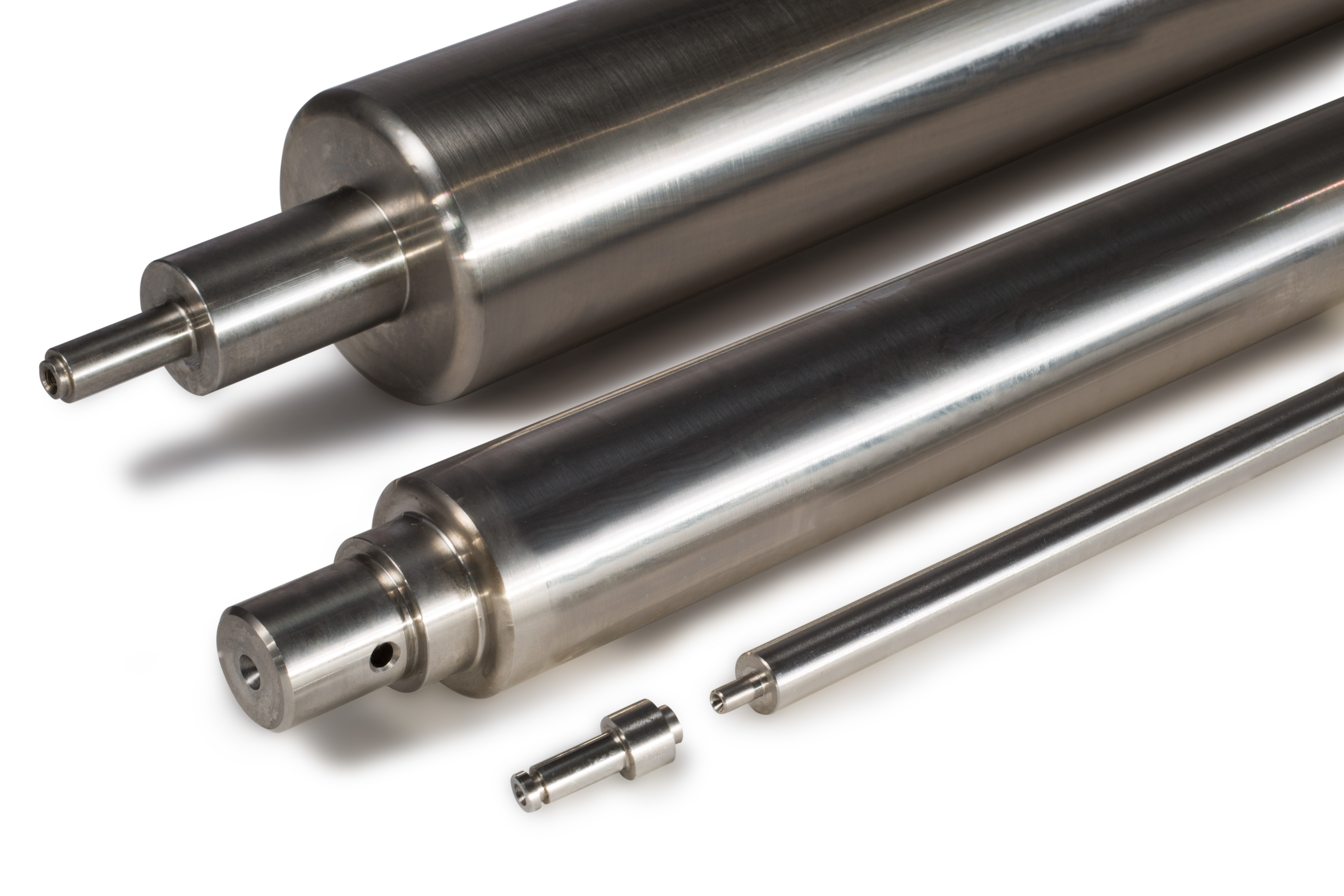
Roller cores and turning workpieces
Roller cores & turned parts made from stainless steel, aluminium, and brass.